
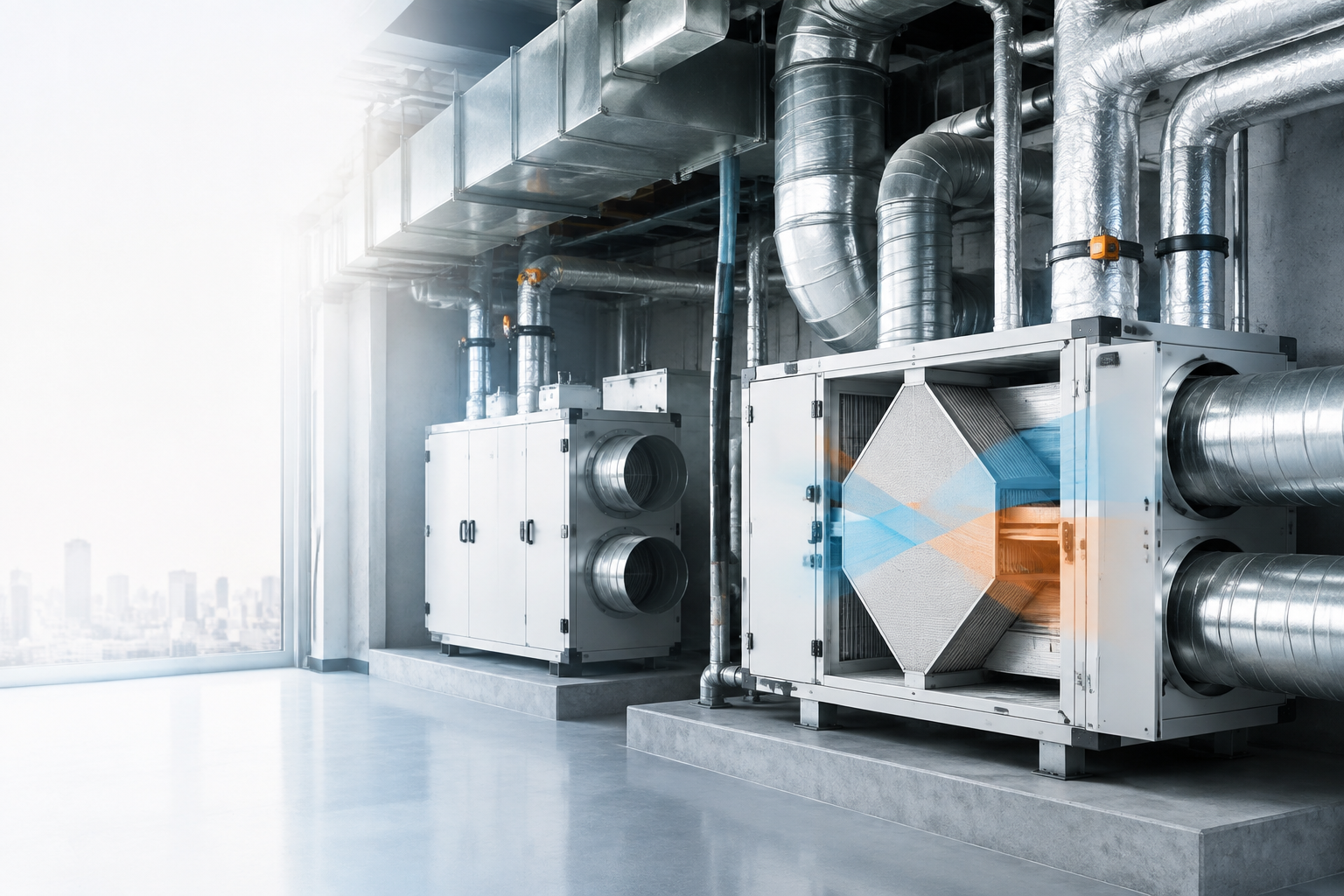
Fresh-Air Ventilation System Types: ERV, HRV or Inline Fan?
Comparez les systèmes VRE, VRC, les ventilateurs gainés et les systèmes d'air neuf pour toute la maison selon les données du projet, la forme d'installation et les exigences de la pièce.

Quick Answer
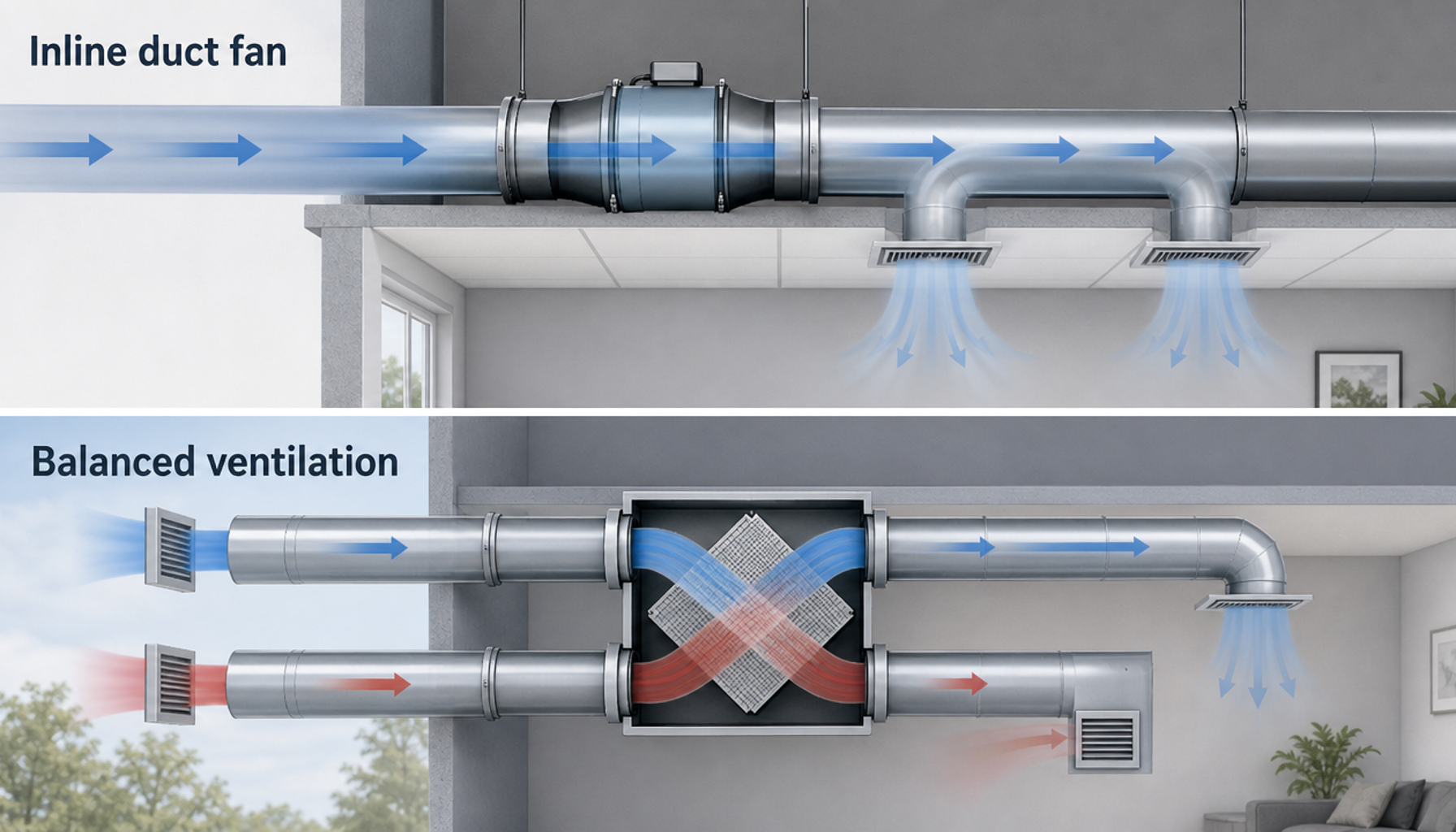
Choose a fresh-air ventilation system by starting with the building scope, airflow requirement, heat-recovery goal, available installation route and control plan. ERV and HRV systems recover energy from exhaust air; inline duct fans move air through a duct route; whole-home systems coordinate several rooms and need a broader design review. Use the existing ERV vs HRV building ventilation guide for the recovery distinction, then confirm the actual product and project inputs before ordering.
System Types at a Glance
| System type | Starting use | Confirm first |
|---|---|---|
| ERV | Projects where moisture transfer and balanced fresh air are part of the design question | Climate, humidity strategy, airflow and control plan |
| HRV | Balanced ventilation where sensible heat recovery is the main comparison | Room or building scope, airflow and installation route |
| Inline duct fan | A ducted exhaust or supply path with a separate fan arrangement | Duct route, fan duty, noise and power |
| Whole-home system | Multiple rooms requiring coordinated ventilation | Room schedule, total airflow, duct layout and commissioning plan |
Start With Project Inputs
Record room use, occupancy, approximate volume, target ventilation pattern, fresh-air source, exhaust points, temperature and humidity priorities, available power and the route for ducts or wall connections. Do not select a system from the family name alone.
ERV and HRV Are Not the Same Decision
The recovery type should follow the project objective and climate questions. Use the existing comparison guide for the basic distinction, then ask for the current product evidence, airflow range, filters, controls and installation documentation for the exact model.
When an Inline Fan Is the Better Starting Point
An inline duct fan may be the more direct starting point when the project is centered on a defined duct route or an exhaust task rather than balanced whole-home ventilation. Review the hub des ventilateurs en ligne pour conduits and confirm the fan duty, duct path, noise expectations and control method.
Whole-Home Planning Questions
Whole-home projects need a room-by-room schedule, total airflow basis, supply and exhaust locations, duct routing, service access and commissioning responsibility. If the project spans several rooms, include a plan and the intended operating schedule in the request for quote.
FAQ
Is an ERV better than an HRV for every home?
No. The appropriate recovery type depends on the climate, moisture strategy, building use and selected product evidence. Compare the project inputs rather than choosing from the name alone.
Can an inline fan replace a whole-home ventilation system?
Not automatically. An inline fan and a coordinated whole-home system solve different design problems. Confirm the airflow pattern, duct route and control requirements first.
What information should I send for a fresh-air system review?
Send room use, approximate dimensions, occupancy, target airflow, supply and exhaust points, installation constraints, power details and destination. A plan or marked-up sketch makes the review more useful.
Does a fresh-air system need a whole-home installation?
Not always. The appropriate scope depends on the rooms, airflow path, installation constraints and selected system type. Confirm whether a single-room, ducted or whole-home approach fits the project.
 English
  Русский
  Français
  Deutsch
  Italiano