
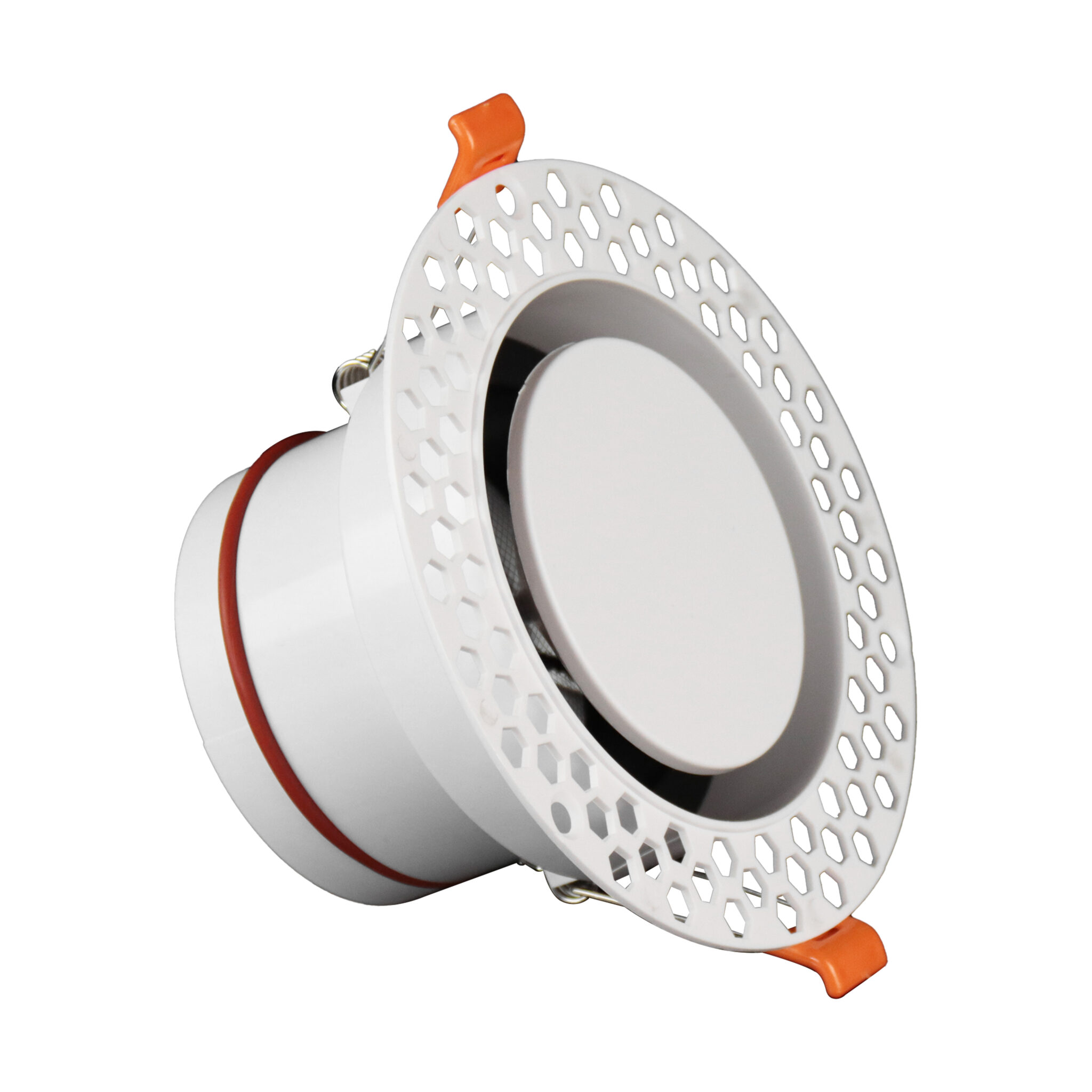
How to Choose a Hidden Round Duct Vent Size: Ø75 vs Ø100
The Ø75 row lists A 131 mm, B 71 mm, and C 75 mm. The Ø100 row lists A 148 mm, B 75 mm, and C 94 mm. Read these dimensions together with the selected opening dr

Quick Answer: The current hidden round duct vent page lists Ø75 and Ø100 nominal options. Their published A/B/C dimensions help check the opening and available space. They do not, by themselves, establish airflow duty or pressure performance because those values are not published for this accessory.
What dimensions are published for each option?
The Ø75 row lists A 131 mm, B 71 mm, and C 75 mm. The Ø100 row lists A 148 mm, B 75 mm, and C 94 mm. Read these dimensions together with the selected opening drawing and duct connection, rather than treating one number as a complete installation rule.
| Nominal option | A | B | C |
|---|---|---|---|
| Ø75 | 131 mm | 71 mm | 75 mm |
| Ø100 | 148 mm | 75 mm | 94 mm |
Check the current product page for the published configuration and feature information.
What does nominal size confirm?
Nominal size identifies the listed Ø75 or Ø100 configuration. It gives the project team a starting point for matching the duct connection, opening, and available wall or ceiling space. It does not confirm the entire duct route, airflow target, pressure requirement, or the final visible finish.
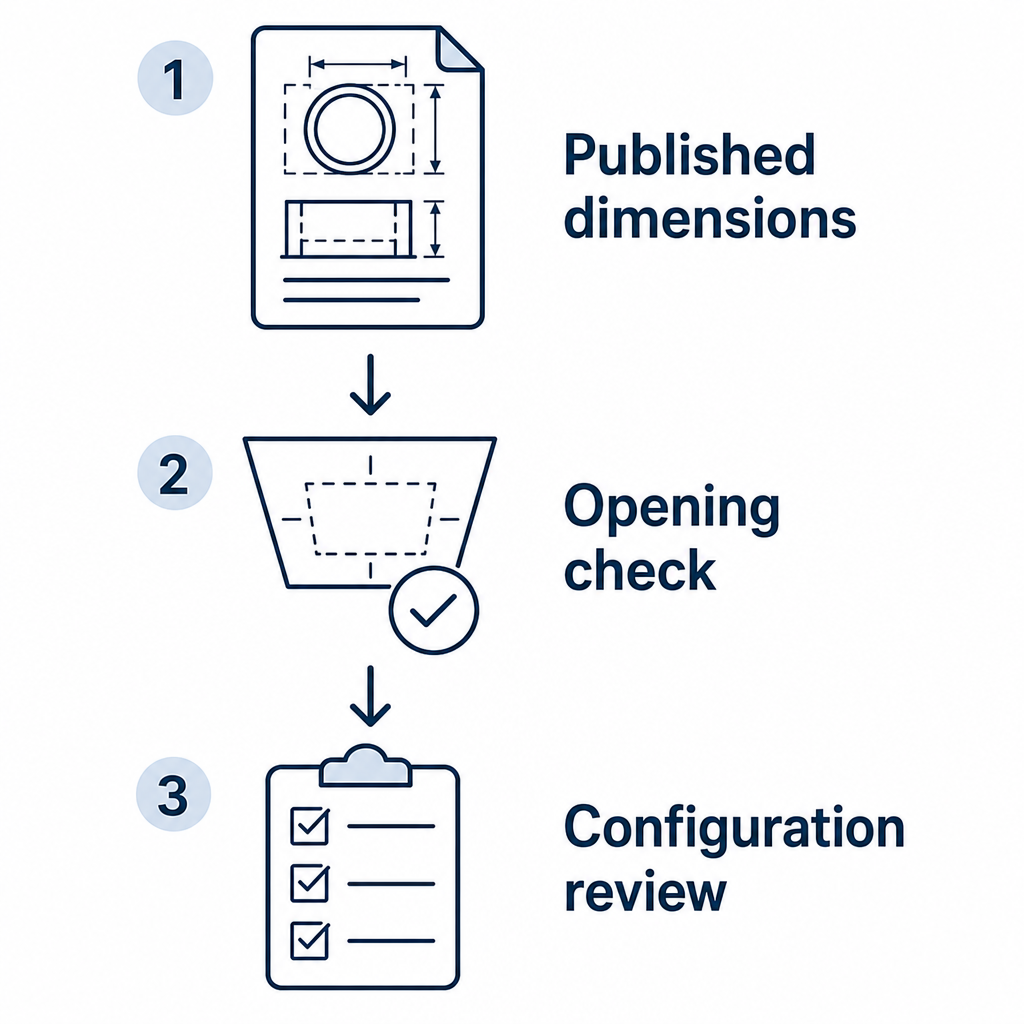
How should a project team use the A, B, and C values?
Use the values as a drawing-check sequence. First identify the planned duct connection. Next compare the selected row with the opening and available space. Then coordinate the visible panel with the wall or ceiling finish. Keep the product page and the project drawing together during this check.
- Check the duct connection before choosing a nominal option.
- Check A/B/C dimensions against the opening and available space.
- Confirm the finish requirement before the visible surface is finalised.
- Confirm paired equipment and any performance requirements separately.
What remains outside the published size data?
The current accessory information does not publish airflow, pressure, electrical data, or a model-scoped certification range. Do not fill these gaps with figures from another product. Keep them as configuration-review items for the actual project.
FAQ
What sizes are published for this hidden round duct vent?
The current product page lists Ø75 and Ø100 nominal options.
What are the Ø75 dimensions?
The published Ø75 row lists A 131 mm, B 71 mm, and C 75 mm.
What are the Ø100 dimensions?
The published Ø100 row lists A 148 mm, B 75 mm, and C 94 mm.
Can size alone confirm airflow?
No. The current accessory page does not publish airflow or pressure data. Match the option to the duct and opening, then confirm the paired equipment for the project.
Next step
Review the hidden round duct vent product page for the current configuration. You can also compare concealed and exposed outlet finishes or plan the finish sequence.
 English
  Русский
  Français
  Deutsch
  Italiano