
HF-200 Inline Booster Fan Guide: 900 m³/h and 380 Pa Selection
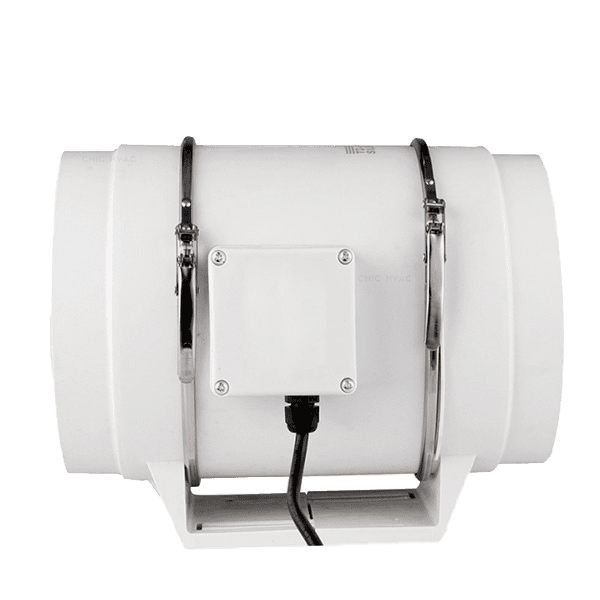
HF-200 is an oblique-flow inline duct fan for ducted ventilation and boosting. The product page publishes separate operating rows, not one universal performance

Quick Answer: Select HF-200 by reading one published operating row as a complete set of values, then checking the planned duct route, installation space, electrical supply, and required operating mode. The published HF-200 rows provide 900 m³/h and 380 Pa at the stated maximum row; select from the full row, not from airflow alone.
What does the published HF-200 data show?
HF-200 is an oblique-flow inline duct fan for ducted ventilation and boosting. The product page publishes separate operating rows, not one universal performance number. Use the selected row against the planned project duty.
- Single-speed: 900 m³/h, 380 Pa, 130 W, 43 dB(A), 220 V / 50 Hz
- Dual-speed: 900/700 m³/h, 380/302 Pa, 130/100 W, 43/40 dB(A)
- Published size: nominal duct 200 mm; dimensions 303×245×245 mm
Review the published HF-200 operating rows on the HF-200 / HF-315 dual-model product page before deciding on the final configuration.
Why should one operating row stay together?
Airflow, static pressure, power, noise, current, and speed mode describe one operating choice. Do not combine airflow from one row with pressure, power, or noise from another. This is the clearest way to keep the requested configuration aligned with the published data.
What should be checked before requesting a review?
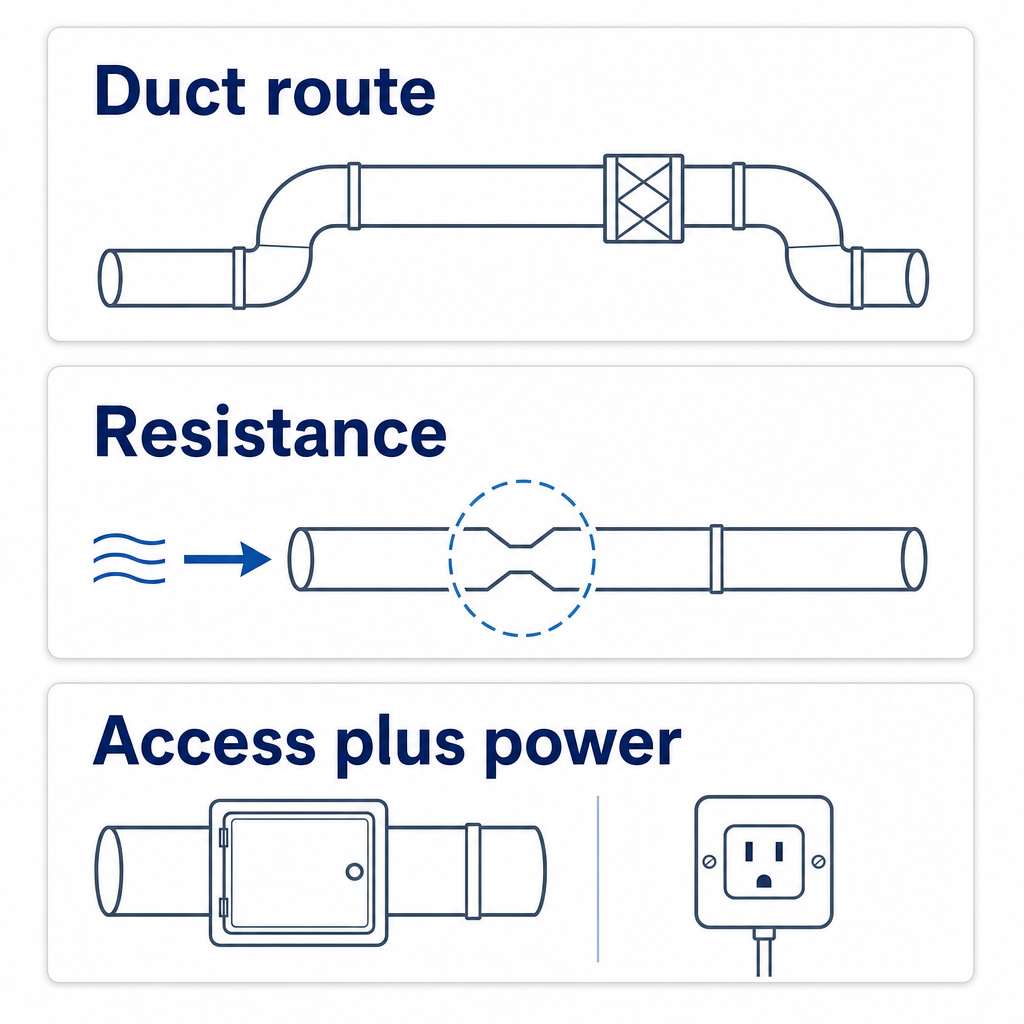
Confirm duct diameter, route length, bends, filters or silencers, target airflow, static-pressure demand, voltage and frequency, available installation space, and the required operating mode. These are project inputs, not values that can be inferred from the model name alone.
- Published product facts: the operating rows and size listed above.
- Подтверждение проекта: route resistance, target duty, installation conditions, electrical supply, and final suitability.
When should you compare another HF model?
Compare a sibling model only when the required project duty differs from the published HF-200 rows. Use the adjacent product pages as separate reference points; do not infer a performance ranking outside their published tables.
Compare the published HF-150 rows or review the published HF-250 rows if the project duty changes.
Request a model review
Prepare the route length, bends, duct diameter, target airflow, voltage/frequency, preferred operating mode, installation space, and quantity. Use the HF-200 quote action on the dual-model product page for a configuration review.
FAQ
What is the published airflow for HF-200?
The published airflow is row-specific. Read the selected row with its stated static pressure, power, noise, voltage, and operating mode rather than using airflow as a stand-alone selection result.
Should I choose single-speed or dual-speed?
Choose the operating row that matches the required operating pattern. Use single-speed for one planned operating point. Use dual-speed only when the project needs the two published settings.
What should be checked before ordering?
Check duct diameter, route resistance, target airflow, static pressure, voltage/frequency, available space, and the selected operating row.
Next step
Open the HF-200 / HF-315 product page to inspect the published details and use the inquiry route when the project inputs are ready.
 English
  Русский
  Français
  Deutsch
  Italiano